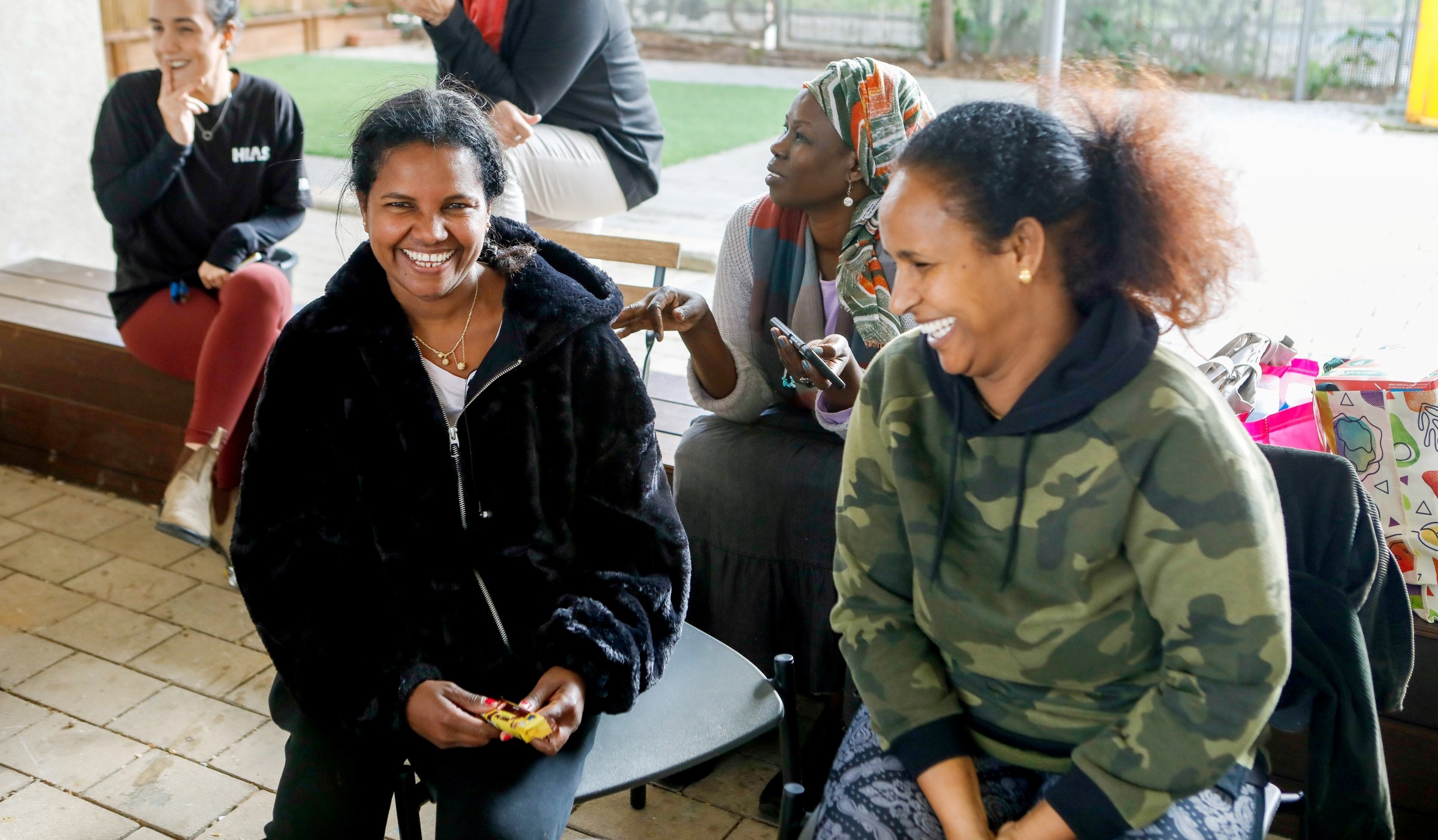
Yordanos (L) and Tagasti (R), two African asylum-seekers who live with their children in Israel, attend a food and other supplies distribution held by HIAS in Tel-Aviv on February, 14, 2024. (AG for HIAS)

Israel

Yordanos (L) and Tagasti (R), two African asylum-seekers who live with their children in Israel, attend a food and other supplies distribution held by HIAS in Tel-Aviv on February, 14, 2024. (AG for HIAS)

Founded

1950

Connect

info-il@hias.org

+972-3-6911322

There are approximately 30,000 asylum seekers in Israel, the majority having fled genocide in Sudan and forced military conscription in Eritrea: most entered Israel after a perilous journey at the hands of smugglers. Asylum seekers within Israel’s borders experience difficult conditions that limit access to protection and make it difficult to lead a stable life.

The Israeli government continues to struggle to implement an appropriate response, instead focusing primarily on deterrence and pressuring people to leave. As a result, it has been nearly impossible for applicants to gain asylum, with Israel’s approval rate less than 1%. Although some refugees have been in the country for years and speak Hebrew fluently, few prospects for local integration, immigration status, and access to basic rights exist.

HIAS Israel was a quick responder to the influx of Ukrainian refugees in 2022, providing legal and paralegal aid to prevent deportation and reunite families. Research shows the need for further legal protection, access to employment programs, culturally appropriate mental health services, and strengthened protection monitoring for women, children, and other vulnerable groups. HIAS Israel works closely with community volunteer centers assisting Ukrainian refugees.
Our Work

HIAS protects and supports refugees so they can build new lives and reunite with family members in safety and freedom. In Israel, HIAS plays a critical role helping refugees secure legal status, the first step toward regaining control and stability in their lives. HIAS also assists refugees with access to social rights and services, facilitates resettlement, and works closely with the private sector to provide pro bono legal support for refugees. In addition, HIAS advocates for a fair asylum system and offers higher education support to Jewish immigrants coming to Israel.

Impact

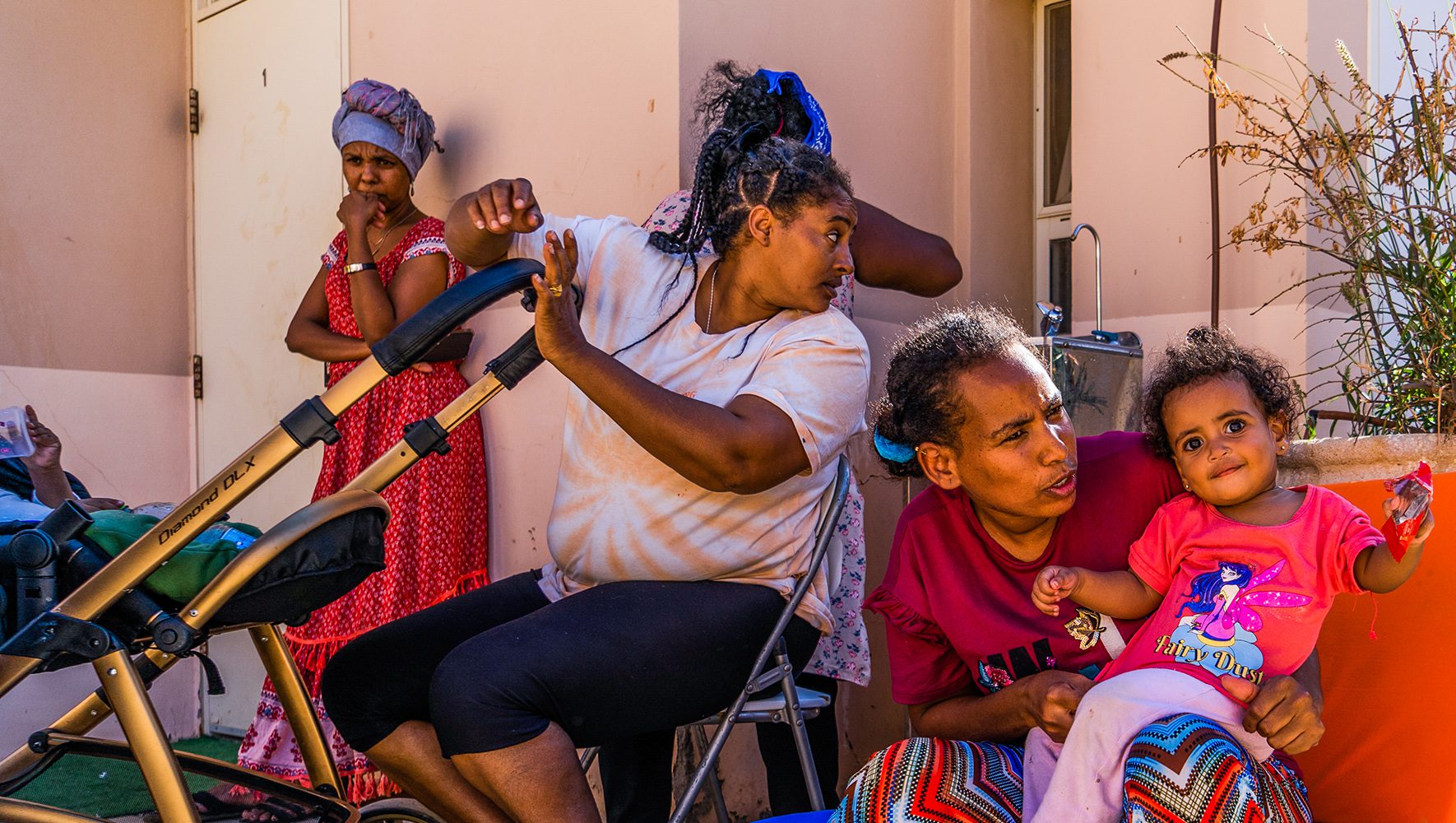
An Eritrean mother and her young daughter wait for assistance provided by HIAS to a displaced Eritrean community in Nitsana, Israel, on October 26, 2023. (Sammy Voit for HIAS)

An Eritrean mother and her young daughter wait for assistance provided by HIAS to a displaced Eritrean community in Nitsana, Israel, on October 26, 2023. (Sammy Voit for HIAS)

October 7 Attacks Displaced More Than Israeli Jews

When Solomon and his family were forced to flee their home in Sderot after the Hamas attack on Oct.7, they were directed by the Aid Organization for Refugees and Asylum Seekers in Israel, known as ASSAF, to a shelter in Tel Aviv for people whose lives had been upended by the violence. But when they arrived, they were abruptly denied entry. Unbeknownst to ASSAF, the shelter owners wished to serve only Jewish Israelis, not asylum-seekers like Solomon who hailed from Sudan or Eritrea and have been living in Israel sometimes for decades.

Solomon (not his real name) is among the estimated 30,000 or so asylum-seekers in Israel from Africa, who fled genocide, slavery or political unrest in their countries of origin. According to the UNHCR, the UN Refugee Agency, 1,200-1,500 of these African asylum seekers have been forced to leave their homes in southern Israel as a result of the Hamas attack.

Read more

HIAS’ services are free. If someone tries to charge you for services claiming they represent HIAS, please report it at our confidential email address: ethics@hias.org. HIAS has a zero-tolerance policy on fraud and corruption. 

For any other inquiries please email us at info@hias.org.